Quality Caught at the Station, Not Three Stages Later
Embedded tiger teams for AI, data, and modernization projects
A cement manufacturer was running its production line on paper checklists and verbal handoffs. Quality problems kept slipping through until units were already deep in the line. We built the system that fixed that.
BONUS: We extended the system to two convenient mobile apps so workers can report issues instantly and supervisors can streamline their work—all from their smartphones.
(not “resume spam”)
1) Who we are
Founder-engineers, not consultants. Our team built Five9 (public SaaS) and DoctorBase (scaled to ~9M U.S. users pre-acquisition). We run delivery like operators: clear scope, tight feedback loops, production-grade quality, and measurable outcomes.
2) Why we're different
Live pair-programming is mandatory. Every engineer is screened in real-time on applied problem-solving and code quality. It's expensive and time-consuming — which is exactly why most vendors don't do it.
3) How we work
University-anchored talent funnels. We partner with administrators and professors in Brazil, Poland, Ukraine, and Colombia to recruit top CS and applied-math talent (including PhD candidates), then train them on production AI/data and enterprise modernization patterns.

Layton Wedgeworth
Current: Anthropic (Former: Invitae, Path, Ebay)
4) Social proof
Teams we've built have delivered systems across Fortune 500 ecosystems (e.g., LabCorp) and tier-1 VC-backed startups (including a16z portfolios).
What you buy
- A small, senior team that plugs into your existing stack.
- Production increments every 1-2 weeks (no “big reveal” delivery).
- Security-by-design: audit trails, access control, and runbooks.
- Clean handoff: documentation, dashboards, and ownership transfer.
Engagement model
Start with a defined 6–10 week pilot (fixed scope, clear metrics). If it works, scale to a phased rollout. If it doesn't, stop—without carrying a permanent cost structure.
Next steps
Free 45-minute consult with an AI architect: proposed architecture + pilot scope + staffing plan + budget range.
Note: projected ROI depends on data quality, integration access, adoption, and vendor constraints. We validate assumptions in discovery and lock the pilot scorecard before build.
Case Study: Cement Manufacturer
Project context
| Client | Cement manufacturer • 3 production facilities • 14 manufacturing stations per line • 220+ floor workers and inspectors • approx. 180 units produced per shift |
| Starting point | Workers followed printed instruction sheets and passed paper checklists from station to station. Quality problems usually get caught too late, after a unit has already moved through several stages. Fixing them meant expensive rework or scrapping the unit entirely. |
| Goal | Build a digital system where workers get clear step-by-step instructions at their station, inspectors formally sign off before a unit moves forward, and management can see the full production picture in real time. |
| Constraints | Zero tolerance for production downtime during rollout • Wide range of technical comfort among workers • Spotty connectivity on parts of the factory floor • Full integration required with existing ERP system |
What We Built (8-week pilot → 5.4-month rollout)
Station Worker Application
- Step-by-step digital work instructions per station
- Issue flagging directly from the app
- Real-time status reporting to dashboard
- Full audit trail per unit produced
Quality Control & Inspection Workflow
- Digital checklist tied to each unit
- Enforced sign-off gate before unit advances
- Photo capture at each inspection point
- Auto-escalation on failure or deviation
Management Dashboard
- Live production view across all stations
- Heatmaps by station, shift, or product type
- Shift-over-shift trend analysis
- Alerting on threshold breaches
Security & Operations
- Role-based access control + audit logs
- Offline resilience for spotty factory-floor connectivity
- Full ERP integration (bidirectional sync)
- Encrypted data storage and transit
ROI snapshot (measured impact + financial model)
| Financial Line Item | Value |
|---|---|
| Tiger team cost (pilot + rollout) | $612,000 |
| Annualized run-rate savings | $2,340,000 |
| Annualized run-rate revenue lift | $890,000 |
| 12-month net benefit | $2,618,000 |
| Payback period | 13.6 weeks |
| 12-month ROI | 328% |
Method: hard-dollar savings are anchored to labor minutes, throughput, leakage capture, and vendor spend. Revenue lift reflects conversion, cycle time, and retention improvements attributable to the shipped workflows.
Appendix A:
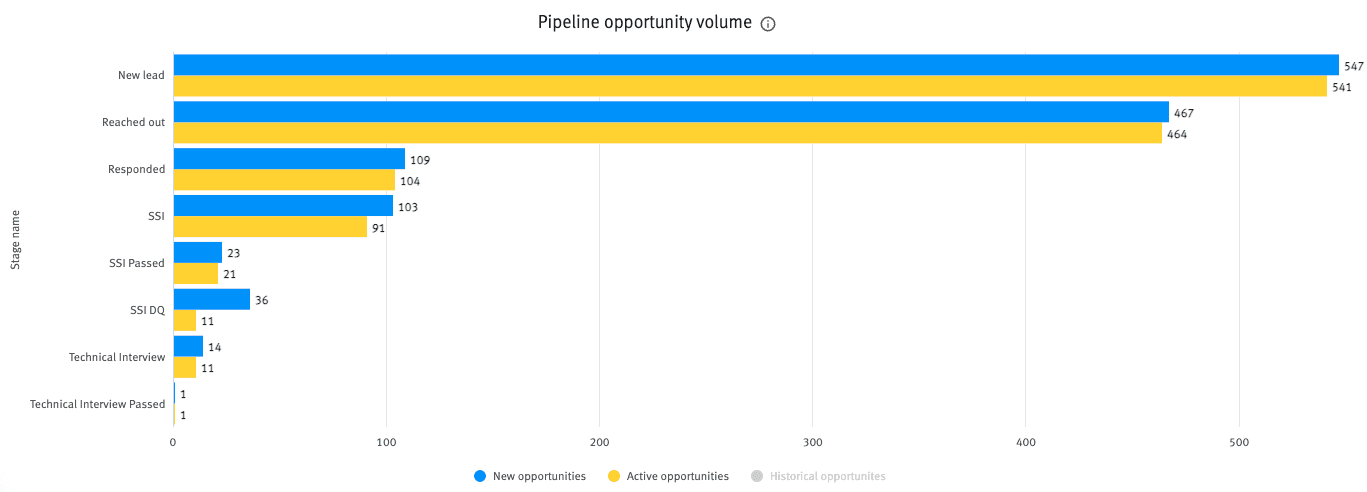
Hiring just one fullstack engineer (senior) requires over 500 candidates sourced, 100 initial interviews, and 14 two hour technical live pair programming to have one candidate pass our test.
Nobody else in our industry does this rigor.