From Paper Reports to
AI-Powered Service Intelligence
Embedded tiger teams for AI, data, and modernization projects
A food equipment manufacturer had five years of service reports sitting in filing cabinets across eight regions, doing nothing. We built the platform that changed that: an AI knowledge base that helps technicians prepare before every job and shows the company which parts are causing the most problems.
BONUS: We extended the AI into a convenient mobile app for the field technicians so they reduced onsite visits by 43% and made every technician their best technician.
(not “resume spam”)
1) Who we are
Founder-engineers, not consultants. Our team built Five9 (public SaaS) and DoctorBase (scaled to ~9M U.S. users pre-acquisition). We run delivery like operators: clear scope, tight feedback loops, production-grade quality, and measurable outcomes.
2) Why we're different
Live pair-programming is mandatory. Every engineer is screened in real-time on applied problem-solving and code quality. It's expensive and time-consuming — which is exactly why most vendors don't do it.
3) How we work
University-anchored talent funnels. We partner with administrators and professors in Brazil, Poland, Ukraine, and Colombia to recruit top CS and applied-math talent (including PhD candidates), then train them on production AI/data and enterprise modernization patterns.

Layton Wedgeworth
Current: Anthropic (Former: Invitae, Path, Ebay)
4) Social proof
Teams we've built have delivered systems across Fortune 500 ecosystems (e.g., LabCorp) and tier-1 VC-backed startups (including a16z portfolios).
What you buy
- A small, senior team that plugs into your existing stack.
- Production increments every 1-2 weeks (no “big reveal” delivery).
- Security-by-design: audit trails, access control, and runbooks.
- Clean handoff: documentation, dashboards, and ownership transfer.
Engagement model
Start with a defined 6–10 week pilot (fixed scope, clear metrics). If it works, scale to a phased rollout. If it doesn't, stop—without carrying a permanent cost structure.
Next steps
Free 45-minute consult with an AI architect: proposed architecture + pilot scope + staffing plan + budget range.
Note: projected ROI depends on data quality, integration access, adoption, and vendor constraints. We validate assumptions in discovery and lock the pilot scorecard before build.
Case Study: Food Equipment Manufacturer
Project context
| Client | Mid-size food equipment manufacturer • 8 regional service hubs • 1,200+ machines in the field • 47 field technicians • approx. 6,000 service reports filed annually |
| Starting point | Every service report was handwritten on paper, filed away, and never looked at again. Technicians showed up to jobs cold, with no idea what was wrong or which parts to bring. Repeat visits were common and expensive. Nobody at the company had a clear picture of which machines broke the most, or why, so nothing ever got fixed at the source. |
| Goal | Build a tool that pulls five years of service history into a searchable knowledge base, helps technicians prepare for jobs before they leave the shop, and flags the parts that keep causing problems so the company can act on them. |
| Constraints | Five years of handwritten reports in different formats depending on the region. Field offices had minimal IT setup. Technicians needed something that worked on a phone. And there was no existing structured data to start from, so the AI pipeline had to be built from scratch. |
What We Built
AI Extraction Engine
- Reads 5+ years of handwritten service reports using OCR and AI, turning unstructured notes into clean, structured records
- Pulls out the key details from each report: what broke, how it was fixed, which parts were used, and how long the repair took
- Flags low-confidence extractions for human review, so the data stays accurate
- New reports from the field flow into the system automatically as they come in
Pre-Visit Diagnostics Portal
- Technicians type in the reported problem and get a ranked list of likely causes based on past repairs
- Each result comes with a fix playbook drawn from real historical data, not guesswork
- The system generates a parts list for the job, so technicians show up with what they actually need
- Works on any device, in the field, before or during a job
Weak Link Detection & Analytics
- Shows which parts are failing most, broken down by machine type and region
- Makes it easy to spot when a specific component is responsible for a large share of service calls
- Gives engineering and procurement the data they need to make a case for better parts
- Cross-references field failure rates with manufacturing batch data to catch quality issues early
Security & Operations
- Role-based access control with separate views for technicians, regional managers, and engineering
- Full audit log of report ingestion, query activity, and system outputs
- Documentation and runbooks included for the internal team to own the platform after handoff
ROI snapshot (measured impact + financial model)
| Financial Line Item | Value |
|---|---|
| Tiger team cost (pilot + rollout) | $485,000 |
| Annualized run-rate savings | $1,820,000 |
| Annualized run-rate revenue lift | $380,000 |
| 12-month net benefit | $1,715,000 |
| Payback period | 14.2 weeks |
| 12-month ROI | 254% |
Method: hard-dollar savings are anchored to labor minutes, throughput, leakage capture, and vendor spend. Revenue lift reflects conversion, cycle time, and retention improvements attributable to the shipped workflows.
Appendix A:
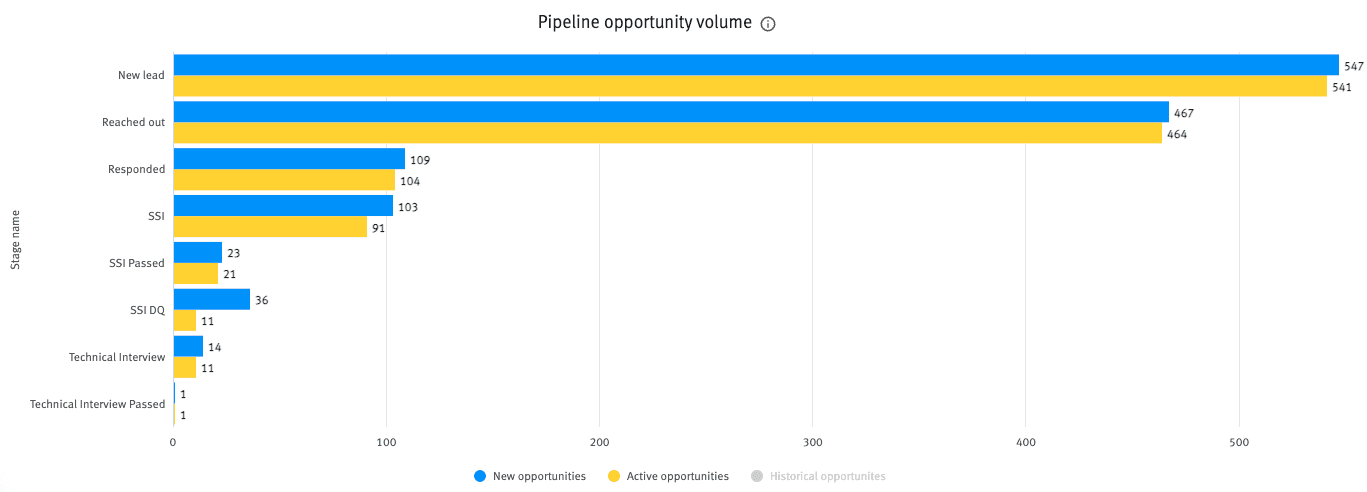
Hiring just one fullstack engineer (senior) requires over 500 candidates sourced, 100 initial interviews, and 14 two hour technical live pair programming to have one candidate pass our test.
Nobody else in our industry does this rigor.